
-Di-PT-Pertamina-Geothermal-Energy.jpg)
Jakarta - PT Pertamina Geothermal Energy (PGE) as a company that develops clean energy and environmentally friendly generation manages 14 working areas with a total installed capacity of up to 617 MW. With such an installed capacity, there is a potential for reducing carbon emissions by 2.58 million tons of CO2e / year and is already included in the Clean Development Mechanism (CDM) mechanism.
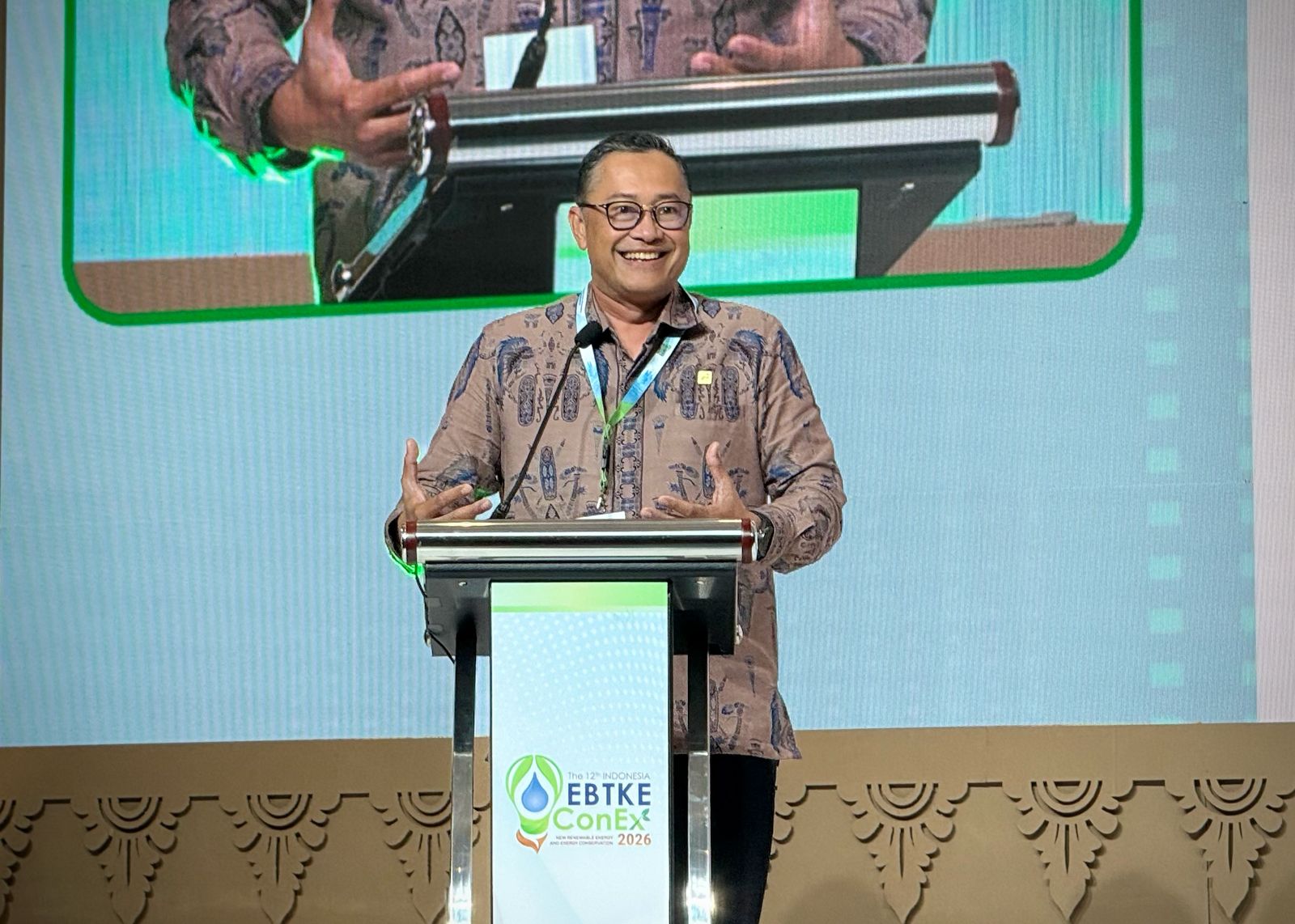
PGE President Director Ali Mundakir explained, CDM is a project with the function of reducing greenhouse gas (GHG) emissions that can be economically beneficial and can reduce global warming to support sustainable development. This is in line with the commitment of the Indonesian government to the 2015 UN Climate Conference (COP-21) in Paris for a 29% reduction in carbon emissions by 2030, even allowing up to 41% if it gets international support.
"Until now, we have managed seven CDM projects. Even six PGE CDM projects have been registered in the United Nations Framework Convention on Climate Change (UNFCCC), namely the CDM PLTP Kamojang Unit 4 project, Ulubelu Unit 3 & 4, Lumut Balai Unit 1 & 2, Lumut Balai Unit 3 & 4, Kamojang Unit 5 and Karaha Unit 1. While the Lahendong Unit 5 & 6 Project is in the process of being registered with the voluntary carbon mechanism, "he explained.
Ali emphazied, PGE's efforts to increase benefits related to carbon emission reduction did not stop at the registration of the PGE CDM project at the UNFCCC. "In its implementation, we strive for carbon credits to have better quality, high complexity and provide benefits for sustainable development. This is achieved by seeking carbon credits to reach Gold Standard / GS (or now referred to as the Gold Standard for the Global Goals) based on benchmarks from the Gold Standard Foundation. We even succeeded in registering five CDM projects as CDM Gold Standard which is the first CDM Gold Standard project in Indonesia, "he added.
In addition, PGE has also registered its CDM project using voluntary mechanisms namely the Verified Carbon Standard or VCS. The VCS mechanism is an alternative to the development of the contribution of carbon emission reduction, especially in the voluntary market while still requiring the contribution to environmental and social aspects in addition to the potential emission reduction aspects.
With the carbon credit potential that has been achieved, and considering the increasing level of concern of countries in the world for the use of clean energy and carbon emission reduction, PGE expects the CDM market to be better and more stable in the coming years, so that PGE's carbon credit potential can better commercialized.
"For example, in the monitoring period of December 16, 2010 to February 28, 2011 for Kamojang CDM 4, the potential for reducing carbon emissions that have been issued in the form of Certified Emission Reduction (CER) and successfully commercialized is 92,691 tons of CO2e. At that time, the CER price per ton of CO2e was around 4-14 Euros. This is a special achievement for PGE because it is a subsidiary of Pertamina which first succeeded in registering CDM projects and successfully issued Emission Reduction certificates, "concluded Ali.
In the development of recent years, after the end of the Kyoto Protocol in 2012, several climate change-related policies from several countries have affected the Kyoto Market and impacted the depreciation of carbon credit prices. However, for PGE this condition is seen as a challenge to continue to strive to provide the best contribution to the carbon emission reduction aspect, by remaining active and committed to running all CDM projects spread across various PGE working areas.