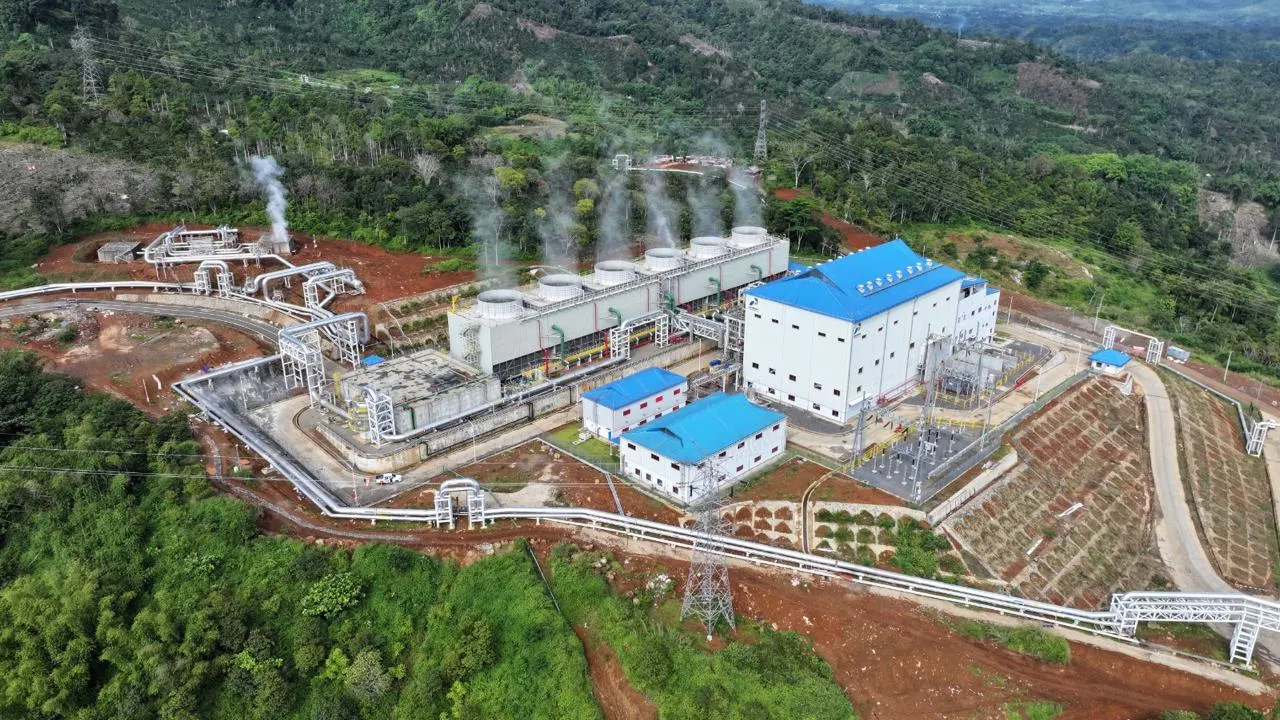


Located in the Pacific Ring of Fire, Indonesia has around 40% of the world's geothermal potential, making it the country with the second largest geothermal reserves after the United States. So far, geothermal energy has been known as a source of clean electrical energy, however, it turns out that geothermal energy can also produce by-products that have great potential to support other sectors, namely agriculture.
Seeing this opportunity, PT Pertamina Geothermal Energy Tbk (PGE) (IDX: PGEO) collaborated with Universitas Gadjah Mada (UGM) to process silica, one of the by-products of geothermal energy, into the Katrili booster, a local innovation that can be a hope for sustainable agriculture in Indonesia.
"PGE is committed to providing real benefits to the community, especially around our operational areas. In Lahendong, where many residents depend on agriculture for their livelihoods, we see an opportunity to optimize geothermal potential into something more useful. This is the basis for our collaboration with UGM in developing the use of silica, a by-product of geothermal energy, into the Katrili booster," said General Manager of PGE Area Lahendong Novi Purwono.
Long-standing Collaboration
The collaboration between PGE and UGM has been established for a long time, even before PGE was officially established and was still called Pertamina Geothermal Division. The innovation of the Katrili booster itself began accidentally during the Covid-19 pandemic in 2020. At that time, Geothermal Expert from the UGM Geological Engineering Department Ir. Pri Utami, M.Sc., Ph.D., IPM visited the PGE Geothermal Working Area (WKP) and took samples of geothermal production to be tested in the laboratory.
"After I analyzed it, it turned out that the content was very high. The main one is of course silica, but there are also many other minerals. In fact, its properties are similar to volcanic ash. Then I thought, why don't we just make it into fertilizer?" said Pri Utami.
He then contacted his colleague from the UGM Faculty of Pharmacy, Dr.rer.nat. Ronny Martien, who is a nanotechnology expert, to help change the form of silica from white powder to a booster that is beneficial for plants. After conducting in-depth research and successfully developing the Katrili booster, UGM and PGE began to communicate with farmers through a participatory and voluntary approach. PGE also provided guidance to farmers.
"The Katrili booster is something new for farmers, because it works differently from the boosters, fertilizers, or pesticides they usually use. Therefore, a process of transferring knowledge and skills is needed so that its use is appropriate and effective. Like medicine, if it is not used correctly, its function can be inappropriate," said the Soil and Water Conservation Engineering Expert from the Faculty of Agricultural Technology UGM Dr. Ngadisih.
Not only in Lahendong, the Katrili booster is also socialized through the UGM student Real Work Lecture (KKN) program in several areas in Java, such as Wonosobo and Magelang.
Benefits for Farmers
In addition to silica, Katrili booster also contains chitosan derived from shrimp and crab shell waste, chosen because of its abundant availability in Indonesia. The use of this waste not only helps reduce waste, but also provides additional benefits in the form of plant protection through its chitosan content. "When combined with silica, chitosan plays a role in coating the surface of plants so that they are more resistant to pests and are able to store water better. Meanwhile, silica helps strengthen the structure of plant cell walls," said Pri Utami.
Katrili booster is used by mixing it with water, then pouring it directly onto the soil. The dosage is adjusted according to the characteristics of the soil and the type of commodity being planted. Currently, Katrili booster has been used on various commodities, such as Gustavi variety tomatoes, batik beans, shallots, and rice.
The benefits of Katrili booster were felt directly by two farmers from Tonsewer Village, Minahasa, namely Rommie and Danni. They started using it in 2024 for tomato plants. “In terms of quality, we see that the results of plants using the Katrili booster are superior to those that only use chemical fertilizers. The fruit looks bigger and is more resistant to disturbances. The ripening process is also more stable, with a much lower risk of rot. Plants are also more resistant to extreme weather, especially when combined with chemical fertilizers,” concluded Danni.
Rommie and Danni feel proud and helped because they can use a booster that comes from their own homeland. The name Katrili itself is inspired by a Minahasa folk dance that is a symbol of gratitude and harmony. Rommie said, “We feel very helped by this PGE program. In the future, we hope that this program can continue, so that more other farmers can feel the benefits. Moreover, the results of managing this commodity are useful for many people.”
In order to support local farmers and strengthen food security, PGE together with UGM will hold the Katrili Grand Harvest in Lahendong, on Monday (26/5). This activity will involve farmer groups from the Minahasa Protestant Church Council (KGPM) and the Minahasa Christian Gospel Church (GMIM). Apart from the harvest, people can also enjoy local culinary specialties and the Katrili Dance performance.